There are projects that arrive at Lincoln Arts Centre that remind you why a university arts centre exists in the first place.
Superfan: The Property of André Waszczyszyn is one of those projects.
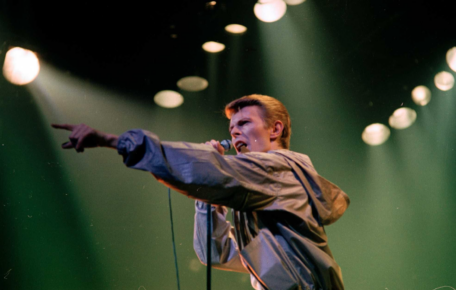
At first glance, it is an exhibition about music fandom. It contains rare and unseen photographs of artists including David Bowie, Debbie Harry and Iggy Pop, alongside tickets, recordings, autographs and the extraordinary accumulation of memorabilia collected by Lincoln local André over a lifetime. It is, in many ways, exactly the sort of material that people love to look at, talk about and share.
And that matters.
One of the things I’m acutely aware of is the sometimes difficult-to-overcome obstacles– particularly in a university setting – of intellectual barriers around ‘arts and culture’. The work we present can be ambitious and nuanced, and make people think, but it should not require people to have a particular vocabulary, education or cultural background before they can engage with it.
Art and culture should be allowed to be popular. They should be able to start with the simple joy of seeing something you recognise, remembering a song, spotting an artist you love, or thinking: I do that too.
This exhibition does exactly that.
But beneath that immediate accessibility is something much deeper.
André was not a celebrity. He was a Lincolnshire man who loved music, photography and live performance with remarkable dedication. He followed tours, went to gigs, waited outside venues and documented the world around the music he loved. He, in many ways, is like many people who go to work and, in their spare time, devote themselves to a hobby they love.
His family inherited an enormous archive and, importantly, a wish from André that they might one day do something with it. His wife Sue and daughter Jo have worked with colleagues at the University of Lincoln to make that possible.
The project was developed by the University of Lincoln’s School of Creative Arts & Design and Lincoln Arts Centre, which feels particularly fitting. The exhibition sits right at the point where academic research, artistic practice, professional cultural production and a very personal family archive meet.
There is something rather wonderful about that.
We have become accustomed to celebrating people through the lens of celebrity or influencer culture. This project does something different. It says that an ordinary life can be culturally significant. That someone’s passions, memories, obsessions and collections can tell us something about a place, a generation and a moment in cultural history – albeit through the lens of celebrity and pop culture. So, you get the best of both worlds.
What I particularly admire about the project is the care with which that has happened. This isn’t an archive that has simply been pulled out of storage and put behind glass.
Lecturer Ollie Smith, Senior Lecturer Andrew Bracey, and Associate Professor Rachel Baynton, have curated and produced the exhibition. They’ve created the conditions for a wide ranging, intergenerational audience to encounter this material – sifting and cataloguing the archive, researching and writing interpretation of the objects, about their significance, and why they are important, ultimately why they speak to a range of people from different backgrounds. They have decided what to exhibit, how things should sit together, how people move through the space, and how the archive might tell us both the story of André and something about ourselves.
They’ve done this all in collaboration with the Waszczyszyn family, and that matters enormously.
Because this is somebody’s life. The people who knew André best have been part of the process of deciding how that life is represented, understood and shared.
That sensitivity matters when you are working with someone’s life, and alongside grief.
It is also a brilliant example of collaboration.
Projects like this can sometimes make the final exhibition look effortless. They aren’t.
Behind the finished gallery is an extraordinary amount of professional expertise: curatorial thinking, artistic interpretation, research, production, design, technical development, installation, access, marketing, front-of-house and all the practical problem-solving that turns an idea into something the public can actually experience.
The creative and technical installation was delivered by Oliver Ventress, Craig Marshall, Rob Britt and Sian Kirman-Wright, alongside the wider Lincoln Arts Centre team.
It is easy to overlook this work because, when it has been done well, you simply experience the exhibition. Our technical team and the wider Lincoln Arts Centre staff have been brilliant in making that happen. They’ve enlarged prints from André’s original negatives, restored images, built rooms, filmed and edited movies, painted, hung, lit, supported accessibility and welcomed guests into the exhibition. All of which are creative acts themselves.
For me, this is one of the great strengths of a university arts centre. We can bring together people who might not otherwise find themselves around the same table: academics, artists, technicians, students, families, researchers, audiences and communities.
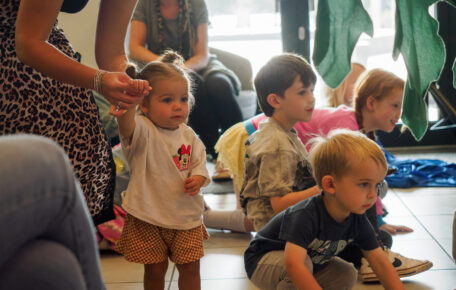
There is also an important intergenerational dimension to Superfan. André’s relationship with music belongs to a particular generation, but the material does not. Younger people can encounter Bowie, Blondie or Iggy Pop through the eyes of someone who was there. Older audiences can recognise their own memories and experiences. Families can talk about the music that shaped them alongside people from an analogue era speak to a generation of digital natives, particularly at a time when many young people are re-discovering analogue formats and to some extent de-teching.
And that makes the gallery a place of conversation rather than simply display.
It also has a direct relationship with our curriculum. This isn’t an exhibition that sits separately from the academic life of the University. It provides a live example for students of how archives can be researched, interpreted, curated and transformed into public-facing cultural experiences. In fact, our students are curating their own response to the work in an assessed and taught module; alongside inputting in to the curation of a variety of the the vitrine displays.
It creates opportunities to think about photography, visual culture, fandom, popular music, cultural memory, curation, archival practice and the relationship between research and public engagement.
For the academic team, whose own work spans both artistic practice and research, there is an obvious connection between the exhibition and wider research practice. For Ollie Smith whose artistic work concerns personas, relationships and social contracts, and for Andrew Bracey completing a PhD looking at the overlaps between artist, curator and overlooked material, less known archives, and there is more in the collection to uncover. For Rachel Baynton, who is currently exploring how we create conditions for ethical collaborative production, the whole exhibition project has been a site of study and artistic practice.
That is the bit I find particularly exciting.
The archive isn’t simply content for an exhibition. It becomes a site for research, teaching, artistic practice, public conversation and community connection.
And it is worth recognising that this kind of work doesn’t happen in isolation. Superfan has been supported using public funding from Arts Council England, enabling an ambitious project like this to be developed and shared with the public.
That investment matters because public funding allows cultural organisations to do more than simply respond to what is already popular. It allows us to take risks, develop ideas, support artists and researchers, work with communities and create experiences that might not otherwise happen.
That is what a university arts centre can do that few other cultural organisations can.
We sit in the middle of all these things.
We share academic research and give it a public life. We celebrate material from our communities and give it the care, expertise and platform it deserves. We give students access to professional practice. We offer audiences experiences that are intellectually interesting without being inaccessible. We work with families, researchers, artists, technicians and academics and create something that none of us could have made alone.
And, ultimately, it needs to be good.
Not just worthy. Not just strategic. Not just useful for an impact case study.
Bloody good art.
Superfan hits all those marks for me.
It is academic. It is civic. It is rooted in community. It is public. It has a direct relationship with curriculum and research. It creates space for intergenerational conversation. It celebrates a local Lincolnshire resident and honours his family. It gives audiences an accessible way into cultural history.
And it is joyful.
I am also very conscious that an exhibition like this only exists because a huge number of people have cared enough to make it happen – from André’s family sharing his archive, to the curatorial and production team, academics, artists, technicians and everyone at Lincoln Arts Centre who has helped bring it into the public realm.
My thanks go particularly to the Waszczyszyn family, and to Ollie Smith, Rachel Baynton, Andrew Bracey,and all our wonderful technicians, marketing and front of house staff.
—
Superfan: The Property of André Waszczyszyn is on at Lincoln Arts Centre Gallery, University of Lincoln from 2–22 October 2026. Monday–Saturday, 10am–4pm. Special opening Sunday 11 October as part of University of Lincoln undergraduate Open Day.
Its free to enter. Explore a lifetime of music fandom through the rare photographs and personal memorabilia of Lincolnshire photographer André Waszczyszyn, including previously unseen images of David Bowie, Debbie Harryand Iggy Pop.
Badge Making Workshop: Saturday 10 October, 11am–1pm — booking required. Curator’s Tour: Saturday 10 October, 1–2pm.
Touch Tours are available by arrangement, and large-print transcripts are available.
Superfan: The Property of André Waszczyszyn is funded by Arts Council England, with support from the University of Lincoln.