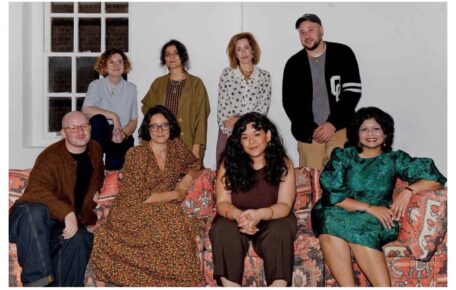
On Monday 12 October, I joined colleagues from nine other arts centres at Battersea Arts Centre for the inaugural session of the Creative Health Network, established by Future Arts Centres in partnership with Battersea Arts Centre.
Lincoln Arts Centre is one of ten arts centres selected for the network’s inaugural cohort, bringing together organisations from across England to share learning, strengthen our understanding of creative health and explore how arts centres can play a greater role in supporting the health and wellbeing of our communities.
I felt genuinely privileged to be in the room.
Over the past five years, we’ve spent considerable time researching and understanding the role that social prescribing, and the wider field of creative health, can play within the NHS and healthcare systems, both in the UK and internationally. We’ve brought people together through conferences at Lincoln Arts Centre, events and conversations to explore the evidence, share practice and understand how creativity can contribute to people’s health and wellbeing.
Yet, despite all that work, there is still so much to understand.
A system that takes time to understand
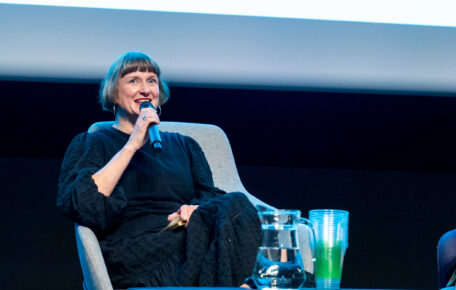
During the session, we explored the NHS 10 Year Health Plan, Fit for the Future, and heard a sobering presentation from the CEO of the National Academy for Social Prescribing.
It was a reminder of how far we’ve come in recognising the relationship between creativity, health and wellbeing, but also how far we still must go before we can properly realise the potential of a truly holistic approach to health.
Creative health has an important role to play in how we think about prevention, community connection, physical health, mental health and the wider factors that shape people’s lives. But recognising that potential and embedding it meaningfully within health systems are two very different things.
If you want to understand more read Professor Daisy Fancourt’s book Art Cure.
Our conversations returned to some familiar challenges and it was validating to know everyone in the country is sharing these.
Bureaucracy. Death by acronym. Unclear governance, or sometimes too much governance. Complex systems, complicated arrangements and job titles that are difficult to understand, let alone navigate.
Alongside this, we’re working within a landscape of significant structural change, from changes to NHS England and the evolving role of Integrated Care Boards (ICBs) to local government reorganisation.
For arts organisations trying to build meaningful relationships with health services, it can be difficult to know where decisions are made, who holds responsibility and how to turn shared ambitions into practical action.
Reflecting on our five years of research, I found myself thinking that perhaps it’s not surprising that it’s taken us this long to develop a meaningful understanding of the system. Before you can begin to make real headway, you first must understand what you’re working with.
And that is no small task.
Evidence isn’t the same as change
One of the striking things about creative health is the abundance of evidence demonstrating its value, and in equal measure the call for more, and crucially the same level of evidence that any kind of clinical intervention in the NHS might face, namely a series of expensive and time-consuming controlled trials.
Across the country, arts organisations are working with communities to support wellbeing, reduce isolation, build social connections and create opportunities for people to participate, express themselves and feel a greater sense of belonging.
Arts centres are already making a contribution. We have trusted relationships with our communities, spaces where people can come together, and artists who create experiences that can have a meaningful impact on people’s lives. We also are innately cross sector and speak to a wide range of stakeholders.
But having evidence of impact is not the same as having a system that knows how to respond to it.
How do we translate what we know into practice that is recognised, supported and sustained? How do we make it easier for health professionals to understand what arts centres offer, and for arts organisations to understand how health systems operate? How do we move beyond individual projects and short-term funding towards relationships that can make a lasting difference?
These are questions that require more than good evidence. They require relationships, shared understanding, effective partnerships and a willingness to work across organisational boundaries. This stuff is hard, and takes an abundance of curiosity.
They also require patience. Not because we should accept slow progress, but because meaningful change depends on understanding the systems we’re trying to influence and finding practical ways to work within, and sometimes challenge, them.
The value of being in the room
Away from the presentations and more formal discussions, some of the most valuable moments came in the conversations in between.
It was great to hear what other arts centres are delivering, how they’re approaching creative health and how they’re connecting with partners in their own places. There was a real value in being able to speak openly with colleagues who are grappling with similar questions, while bringing different experiences and perspectives to the table.
We won’t all have the same answers, and our local contexts are different. But there is a great deal we can learn from one another.
The Creative Health Network creates space for exactly this kind of exchange. Convened by Future Arts Centres and Battersea Arts Centre, it brings together ten arts centres to share practice, develop understanding and explore how we can collectively strengthen the role of arts centres in health and wellbeing.
We have spent years building an evidence base and making the case for creative health. The next challenge is working out how to turn that understanding into meaningful, lasting change and how we can start ‘doing the do’ more intentionally and cleverly locally.
We are more likely to make progress if we’re sharing what we learn, being honest about the challenges and helping one another navigate the complexity.
What this means for Lincoln
I left the session feeling encouraged about the work we’re doing at Lincoln Arts Centre, but also conscious of the opportunities ahead; and the work it will take to seize them.
In many ways, I think Lincoln is ahead of the curve. We’ve invested significant time in understanding the landscape, building our knowledge and exploring how arts and culture can contribute to wider public priorities.
Yet I also came away with a familiar feeling: that Lincoln, and Lincolnshire more broadly, have a great deal to contribute to national conversations, but aren’t always recognised as places from which others can learn.
There is experience here worth sharing, and we shouldn’t underestimate its value.
Being part of this network gives us an opportunity to bring our learning into a national conversation, test our thinking against the experiences of others and challenge ourselves to consider what more might be possible. Just as importantly, it gives us an opportunity to bring new knowledge and approaches back to Lincoln, strengthening the work we do with our communities and local partners.
I want us to be ambitious about what creative health can achieve, while being honest about the work required to make it happen.
Five years of research has taught us a great deal. It has also shown us why this work is complicated, why progress can be slow and why understanding the system is such an important part of changing it.
We have more to learn, and a long way to go. But we also have knowledge, experience and relationships that can help us move forward.
I’m looking forward to continuing the conversation with colleagues across the network, sharing what we’re learning at Lincoln Arts Centre and making sure that the experience and ambition of our city and county are part of the picture.
We have a great deal to contribute, a great deal still to learn, and a much better chance of making progress if we do it together.
The Creative Health Network is an initiative from Future Arts Centres and Battersea Arts Centre. Its inaugural cohort brings together ten arts centres from across England to share learning and explore the role of arts centres in supporting health and wellbeing.
Read the announcement from Future Arts Centres and Battersea Arts Centre: Future Arts Centres and Battersea Arts Centre announce inaugural Creative Health Network cohort.